🌕 AWAKEN
Three layers are yours, the picture, the meaning, and its place in the deck. Tonight the card moves. You place it into a spread, and you watch position change what it says. This is the layer that turns a single card into an actual reading.
Why the exact same card can say three different things
The one question that decides how you read any position
What a neighbor card does to Death before you even flip it
🃏 CARD
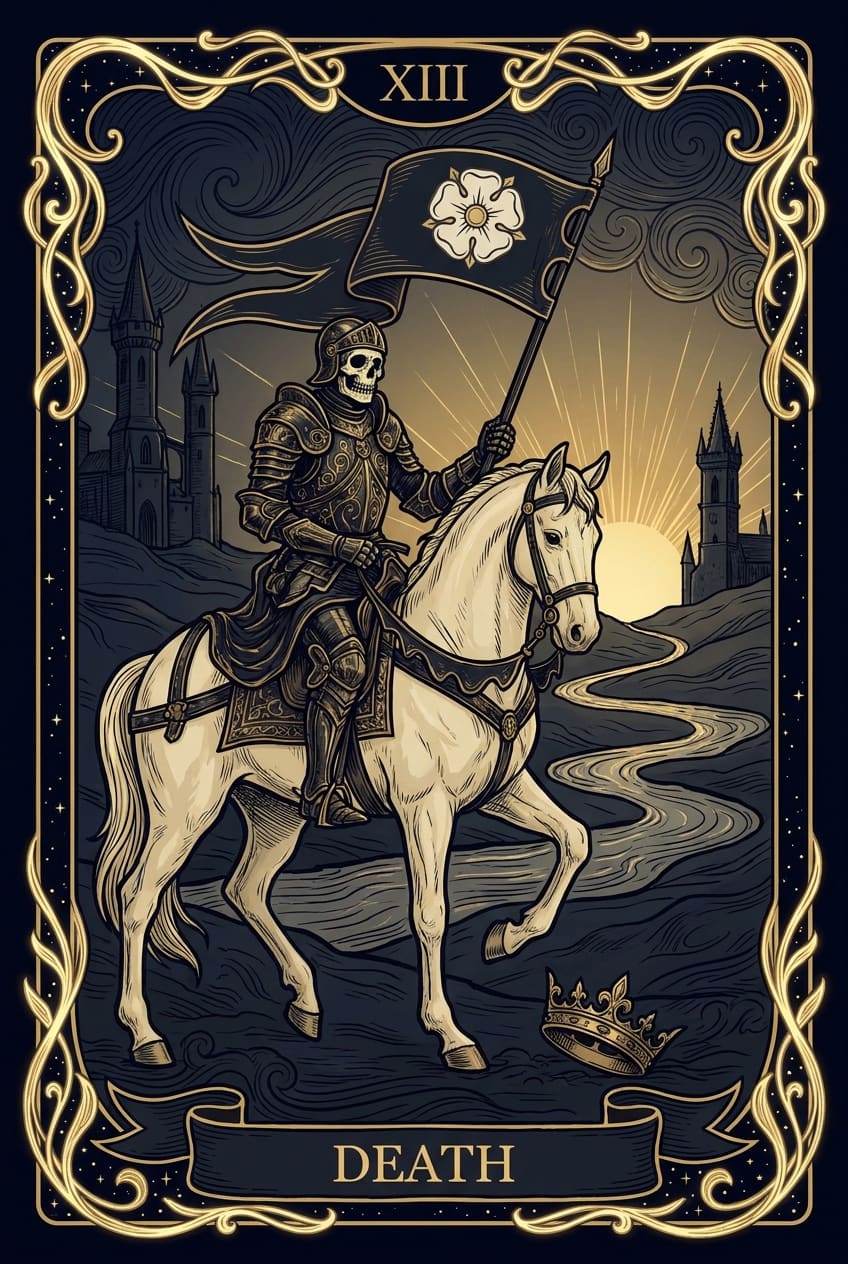
Today's layer is the spread. Same card, but now it sits in a position, and a position always bends the meaning.
🪟 STEPPING OUT
More free reads, on the house.
We teamed up with a few brands to bring you something extra: a short list of genuinely great newsletters.
Every one is free, and every one actually sends emails worth opening.
Help yourself. 🌙
🌖 SEE
Here is a fact that surprises new readers. A card's meaning never stands completely alone. It shifts depending on where it lands in a spread, and what sits beside it. Learning to read positions is what separates memorizing definitions from actually reading tarot.
Start with the simplest spread, three cards: past, present, future. Each position asks a different question, and the same card answers it differently depending on which slot it fills.
In the past position, Death describes an ending that already happened, something behind the reader that shaped where they stand now. In the present position, it describes an ending happening right now, live, something the reader is actively moving through this week. In the future position, it describes an ending still coming, a change the reader has not faced yet but is heading toward.
Same card. Same rider, same rose, same sun. Only the tense changes, and that tense is everything.
Now the second half of position-reading, which is neighbors. A card beside Death shifts its tone the way a word changes meaning depending on the sentence around it. Death next to the Sun softens sharply, since the Sun promises relief right after the ending. Death next to the Tower intensifies, since the Tower is sudden collapse, and together they describe an ending that arrives fast and hard, not slow and clean. Death next to the Star gently reassures, since the Star always follows hard cards with quiet hope.
The real skill here is asking one question before you read any card in a spread: what is this position actually asking? Past asks what shaped you. Present asks what is happening now. Future asks what is arriving. Once you know the question, the card's normal meaning simply answers that specific question, instead of floating free.
🌗 SPEAK
Bring your question into this. Pick a spot, past, present, or future, and place Death there. In your own words, read what it says sitting in that exact position, using everything you have built the last three days.
🌘 JOURNEY
You know how the same hard thing feels different depending on when it happens to you. An ending you're still inside feels nothing like one you can finally look back on. Wherever you are with your own ending right now, that timing matters more than the ending itself. Time is already doing quiet work on it, whether you can feel that yet or not.
🌑 QUICK ONE
In a past, present, future spread, what does Death in the present position usually describe?
a) An ending from long ago
b) An ending happening right now
c) An ending still to come
d) No ending at all
💫 WITH LUNA
Bring tonight's question into Luna, and she will lay Death into that exact spread position and walk you through how the neighbor cards would bend it → luna.steady-spirit.com
✅ TRUTH
One way to read today's layer, not the only way: Placed in the present, Death describes a change actively unfolding right now, its full weight shaped by whatever card sits beside it.
Quick one: b) An ending happening right now. The present position always describes what is live, not past or future.
Tomorrow you read the whole card, live, from memory.
Read a new card with us every morning.